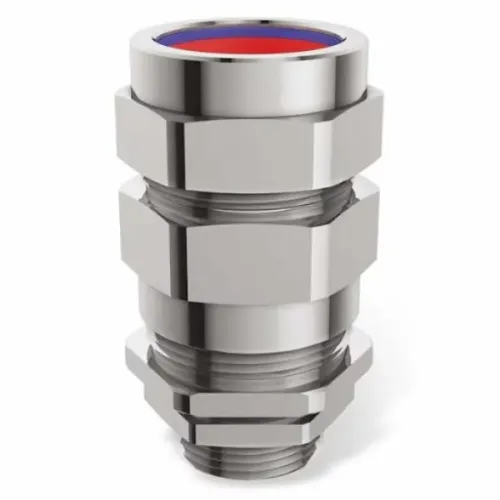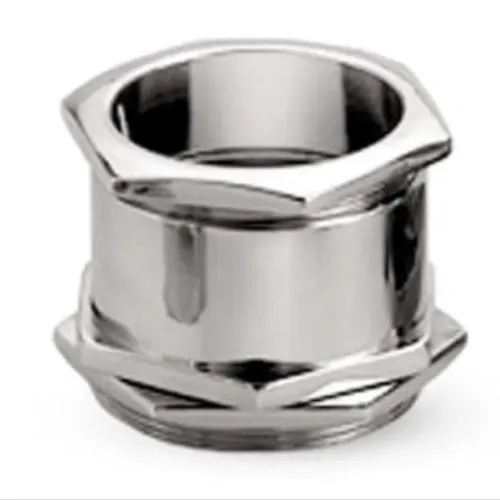

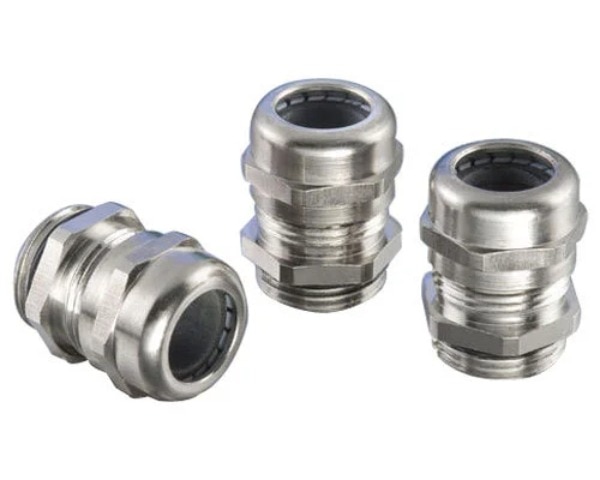
A stainless-steel cable gland does more than hold a cable in a threaded hole: it provides retention, strain relief and a sealed transition into the enclosure. By the end, you will be able to match the gland material, cable diameter, thread, sealing range and accessories to the control-panel environment.
Key takeaways
- Use stainless-steel glands for retention, strain relief and enclosure sealing.
- Choose stainless steel for corrosion, washdown or harsh industrial environments.
- Match the gland to cable diameter, thread type and panel-hole size.
- List glands, locknuts, seals and thread details on the bill of materials.
What a Stainless-Steel Cable Gland Does at a Control-Panel Entry
At a control-panel entry, an SS cable gland performs four jobs: it retains the cable against pull and vibration, maintains strain relief, seals the gap around the cable jacket, and limits dust and water entering through the enclosure wall. It is not merely a threaded bushing.
The complete entry system includes the panel hole, gland, locknut, washer, seal and cable jacket. Match the thread form and pitch, then use the specified hole size and tightening torque; visual tightness proves little. Excessive torque can damage the seal or jacket, while insufficient torque reduces retention and ingress protection.
| Gland type | Cable and electrical function | What it must do |
|---|---|---|
| Standard unarmored gland | One cable with no armor | Grip and seal the outer jacket |
| Armored-cable gland | Cable with armor | Retain the armor, seal the sheath, and provide the specified bonding or earthing path |
| EMC gland | Screened cable or EMC-sensitive panel | Provide a defined shield-contact method, often 360-degree, with verified continuity through the panel bonding system |
IP6X means dust-tight under the stated test. IPX6 covers powerful water jets; IPX7 covers temporary immersion; IPX8 covers immersion under manufacturer-declared conditions. These ratings apply to the assembled entry or enclosure under those tests, not to ss cable glands in isolation.
Industrial control panel cable glands therefore need assessment with the actual panel, locknut, washer, seal and cable.
Where Stainless Steel Is Worth Using in a Control Panel
Use stainless steel when a control-panel entry faces repeated washdown, hygienic production, chemical processing, coastal or marine air, or outdoor MCC and process-skid service. SS cable glands for control-panel manufacturers earn their higher purchase cost when cleanability and service life matter more than the lowest initial price.
| Grade | Best fit | Limitation |
|---|---|---|
| 304 | Moderate corrosion exposure, indoor washdown and general outdoor service | Less resistant to chlorides and aggressive cleaners |
| 316 | Coastal, marine, chloride-rich washdown and chemical areas | Higher cost; still needs correct seals and installation |
| 316L | 316-level corrosion resistance where low-carbon stainless is preferred after welding | Does not compensate for a weak cable jacket, seal or panel interface |
Chlorides from salt air, brine or cleaning residue usually favour 316 or 316L over 304. Check the seal’s operating temperature and chemical compatibility separately; hot caustic or acidic cleaners can attack elastomers even when the gland body remains intact.
Keep crevices, trapped residue and galvanic contact in view. Stainless threads can gall, so clean assembly, correct torque and a compatible anti-seize compound matter; use anti-seize only when the gland’s certification permits it. A stainless gland touching plated steel, aluminium or another dissimilar metal can still create a corrosion site.
Confirm the complete entry, not just the body:
- Match the locknut, washer, coating and panel interface to the environment.
- Check cable-jacket strength, seal range and temperature rating.
- For Ex d, Ex e or Ex t equipment, follow the complete certificate and protection concept; stainless steel alone provides no hazardous-area approval.
How to Choose the Gland Type for Each Cable Entry
Start with the cable construction and the panel entry. A metric single cable gland suits one round, unarmored cable passing through one metric entry; choose its sealing range around the measured jacket diameter. An armored-cable gland must also retain the armor and maintain the specified bonding or earthing path, not merely seal the outer sheath.
A double-compression gland provides separate sealing at the cable sheath and entry area where that construction and application demand it.
Use this decision path for industrial control panel cable glands:
- Choose a standard metric single cable gland for one round unarmored cable and a conventional sealed entry.
- Choose a double-compression or dedicated armored gland when the cable has armor that requires mechanical retention and electrical continuity.
- Choose an EMC gland when the screen needs a defined 360-degree contact method; an insulated gland does not automatically provide shield continuity.
- Choose a barrier gland only for gas migration risk, difficult cable construction or hazardous-area certification. It requires compound preparation and curing, so it is not a routine panel upgrade.
| Body material | Strength and limitation | Choose it when |
|---|---|---|
| Stainless steel 316/316L | Highest corrosion resistance and cleanability; highest cost | Chlorides, washdown, chemicals, marine exposure or demanding hygiene |
| Brass | Strong mechanical performance and lower cost than stainless steel; needs corrosion review | Protected industrial interiors and moderate corrosion exposure |
| Nylon | Lightweight, economical and electrically insulating; lower mechanical and temperature margin | Low-load, non-corrosive entries |
For Ex d, Ex e or Ex t work, select the gland under the complete equipment certificate and protection concept. A stainless-steel body alone does not make an entry hazardous-area compliant.
How to Match the Cable, Thread and Panel Hole
An M20 thread does not define the cable diameter a gland can seal. An M20 gland may suit several sealing ranges, so nominal cable size alone can cause weak compression or damage from over-compression.
- Identify the construction: round unarmored, flat, oval, braided, soft-jacketed or armored. Flat, oval, braided, unusually soft and heavily armored cables need closer manufacturer verification because they do not compress like a round catalogue-test cable.
- Measure the actual jacket outside diameter with calipers at several points along the entry area. Record the largest reading and check for ovality.
- Select a metric single cable gland whose stated sealing range contains that measurement. Do not substitute the cable’s nominal size for this check.
- Match the gland thread to the panel entry and confirm the maker’s installation dimensions before drilling or tapping.
| Thread | Cable capacity | Panel-entry instruction |
|---|---|---|
| M12 | Maker’s sealing range only | Use maker’s clearance hole, tapping, pitch, thickness and length |
| M16 | Maker’s sealing range only | Use maker’s clearance hole, tapping, pitch, thickness and length |
| M20 | Maker’s sealing range only | Use maker’s clearance hole, tapping, pitch, thickness and length |
| M25 | Maker’s sealing range only | Use maker’s clearance hole, tapping, pitch, thickness and length |
| M32 | Maker’s sealing range only | Use maker’s clearance hole, tapping, pitch, thickness and length |
| M40 | Maker’s sealing range only | Use maker’s clearance hole, tapping, pitch, thickness and length |
| M50 | Maker’s sealing range only | Use maker’s clearance hole, tapping, pitch, thickness and length |
| M63 | Maker’s sealing range only | Use maker’s clearance hole, tapping, pitch, thickness and length |
| M75 | Maker’s sealing range only | Use maker’s clearance hole, tapping, pitch, thickness and length |
Before approval, check:
- IP target with the actual cable, enclosure and panel surface.
- Seal temperature range.
- Locknut, washer and earth-bonding parts.
- Specified torque and required installation tools.
- EMC glands’ defined 360-degree shield contact, where required.
What to Put on the Control-Panel Bill of Materials
Write the bill of materials as a complete entry specification, not “SS cable gland.” For ss cable glands for control panel manufacturers, record the cable’s measured jacket outside diameter and select a sealing range that contains it; nominal cable size alone can cause weak compression or seal damage.
Specify each industrial control panel cable glands entry with these fields:
- Stainless-steel grade: 304, 316 or 316L
- Thread standard and size: metric M20, M25 or another declared size, with pitch where required
- Cable sealing range and actual cable diameter
- Seal material and operating temperature range
- Required IP rating for the assembled entry
- Unarmored, armor-retaining or EMC function
- Locknut, sealing washer and earth-bonding parts
- Tightening torque, spanner size, entry-hole diameter, thread length and minimum panel thickness
- Ex d, Ex e or Ex t approval and certificate reference where hazardous-area use applies
| Item | State on the BOM | Why it matters |
|---|---|---|
| Body | 316L stainless steel, for example | Confirms corrosion resistance |
| Thread | M25 × 1.5 metric | Prevents hole and gland mismatch |
| Seal | Nitrile, 20–32 mm, declared temperature range | Confirms jacket compression |
| Function | EMC or armor bonding, if required | Confirms screen or earth continuity |
| Installation | Torque value and washer requirement | Prevents leaks, seal damage and loose entries |
Jay Enterprises can be one supplier option, but approve against its declared dimensions, material grade, sealing range and installation documentation—not the product name alone. A stainless body does not prove fit, bonding or hazardous-area certification.
Related products
 | SINGLE COMPRESSION CABLE GLANDS We are one in all the leading makers, suppliers, and bourgeois of Single Compression Cable Glands to be used beneath most atmospheric condition. View product → |
 | CABLE GLANDS IP 68 Metric Threaded Single Compression Cable Gland We are India's leading manufacturer, supplier, and exporter of Metric Threaded Single Compression IP 68 Cable Gland, IP68 Universal Cable Gland. View product → |
Frequently asked questions
What does a stainless-steel cable gland do at a control-panel entry?
It retains the cable, provides strain relief, seals around the cable jacket and limits dust and water entering the enclosure.
When is stainless steel worth using in a control panel?
Use stainless steel when the panel faces corrosion, frequent washdown, moisture, chemicals or demanding industrial conditions.
How do you choose a cable gland type for each entry?
Select the gland according to the cable construction, required sealing performance, installation environment and whether one or multiple cables pass through the entry.
How do you match a gland to the cable, thread and panel hole?
Check the cable’s outer diameter, select the correct metric or other thread specification, and verify that the gland and locknut fit the panel-hole dimensions.
What belongs on a control-panel cable-gland bill of materials?
Specify the gland material and type, cable-diameter range, thread size, sealing requirement, locknut, washer and any accessories required for installation.